Blog

  • Why Vinegar

    People keep asking me why I’m making vinegar.

    It’s a fair question. It’s not the most obvious thing to build a life around, especially from a small town in the Scottish Highlands. But the honest answer is that I didn’t set out with a business plan and a gap in the market. I saw an opportunity to work with some genuinely amazing people and make something that didn’t exist yet.

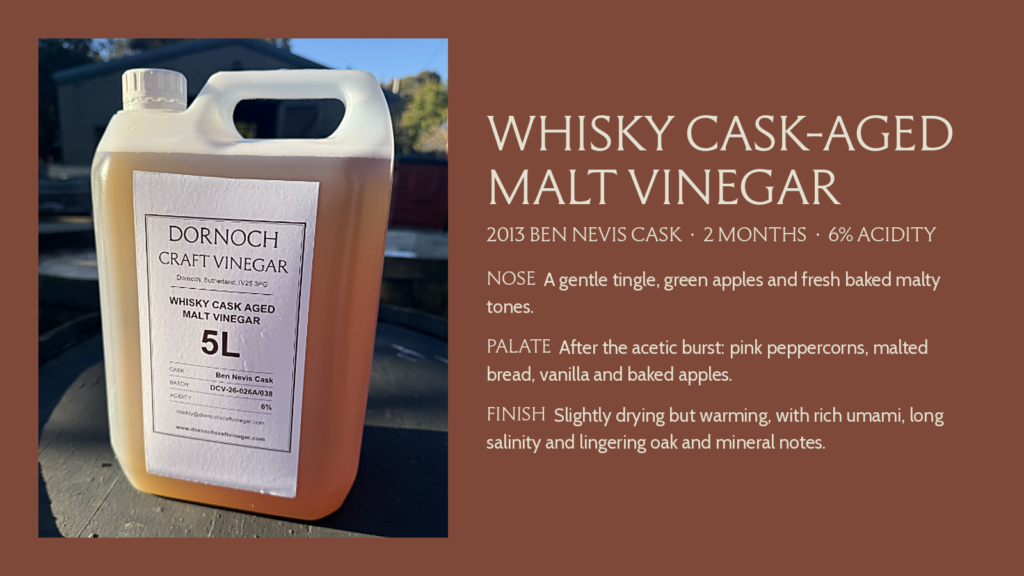
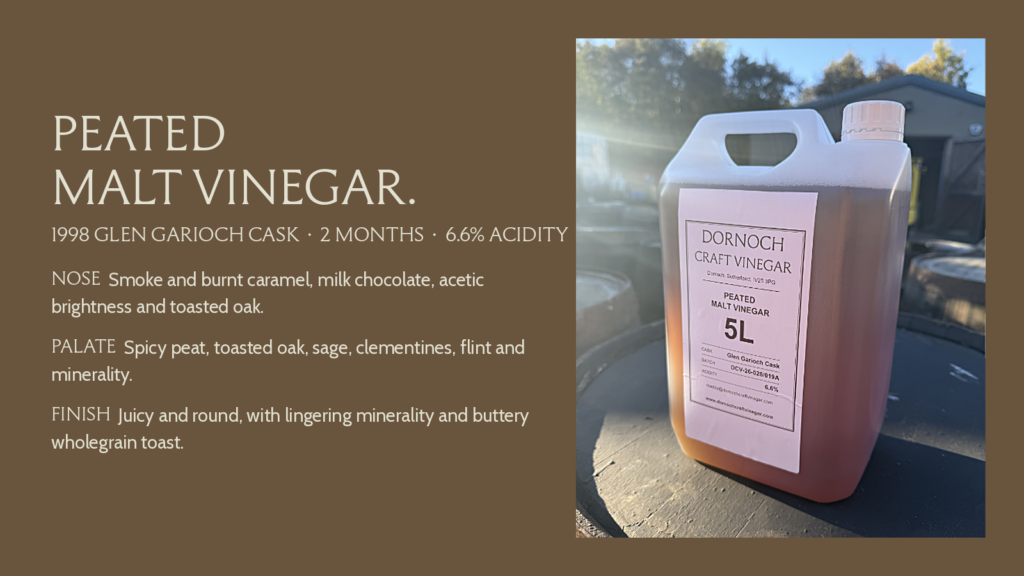
    Phil and Simon Thompson at Dornoch Distillery produce some of the most interesting whisky in Scotland. They also have one of the most extraordinary cask collections I’ve ever seen — we’re talking ex-rare malts, 1970s Ben Nevis, a cask from the nineties that once held French wine. When I realised I could take their organic heritage barley wort — the sweet liquid from mashing — ferment it with my own yeast, run it through acetic fermentation and then age it in those casks, the question wasn’t really “should I do this?” It was more like “I can’t wait to try this out!”

    Scotland has always had something in its bedrock. In the coastlines, in the people. We’re knacky and a bit puckish — generations of Scots hiding whisky stills when they weren’t legally allowed to make it, constantly finding new ways to take barley, water and yeast and turn them into one of our biggest exports.

    What I’m doing is the same energy. Same raw ingredients, different alchemy. Barley goes in one end, and instead of spirit coming out the other, you get vinegar — barrel-aged, living, unpasteurised, with a depth and complexity that nothing from a factory will ever touch.

    And here’s why I think it actually matters, beyond my own obsession. A splash of this in a pan after searing meat and the deglazing liquid has a character — warm, malty, rounded from the wood — that transforms a Tuesday night dinner.

    It’s unpasteurised, so the mother culture is still alive in the bottle, which means it’s naturally functional: three ingredients, nothing else, clean label. Delicious first, and the health benefits are a happy bonus.

    That combination — something that makes your food taste noticeably better AND is a genuinely living, organic product — just gets you feeling good inside and out. Complex flavours you can’t find anywhere else.

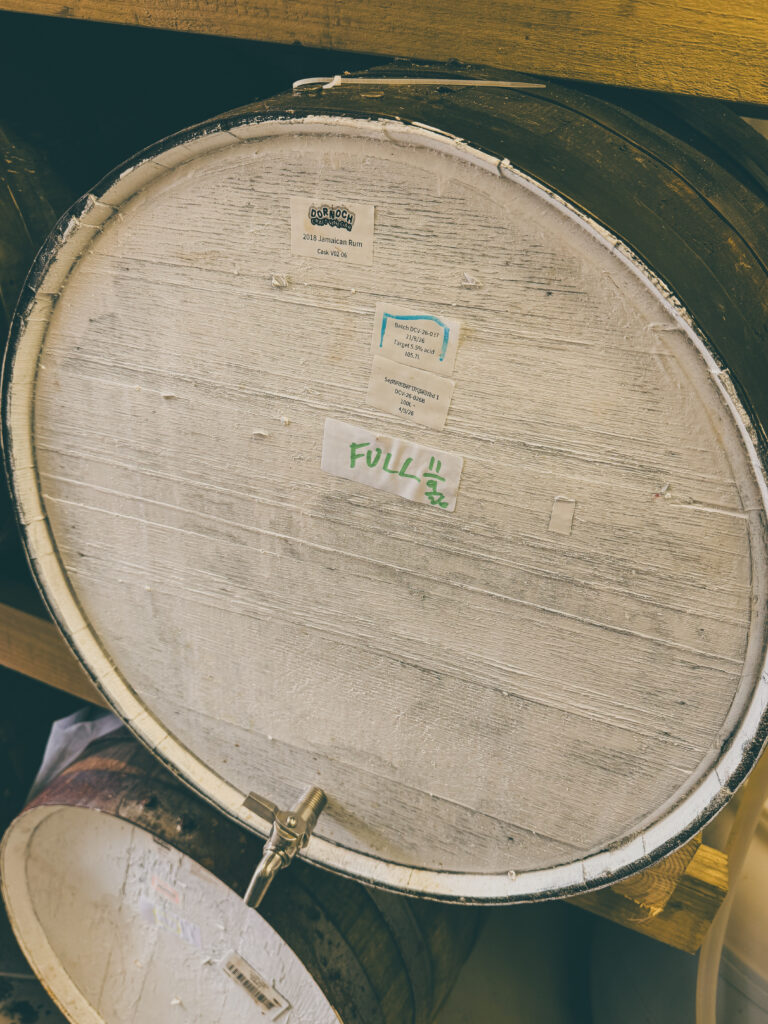
    The process matters too. I ferment the wort myself to about 6% ABV, then it goes through a Schützenbach acetification column — a method that dates back to the 1700s — where the acetic acid bacteria convert the alcohol into vinegar. Then it ages in the distillery’s ex-whisky casks in a four-tier Solera system, which means every bottle contains a component of every batch I’ve ever made. The whole process, from grain to bottle, happens here in Dornoch. Nothing imported, nothing blended, nothing shortcut.

    I think there’s a reason this kind of making resonates right now. Gregorie Marshall at Blackthorn Salt built a graduation thorn tower on the Ayrshire coast — the first in the UK — and spent twelve years working out how to trickle Scottish seawater through blackthorn branches to make salt using a technique that goes back to the sixth century. That’s not a business decision. That’s someone who is completely consumed by a process and can’t stop until they’ve understood it. I feel a deep kinship with that energy, and I think people respond to it because they can tell it’s real. You can’t fake obsession. You can’t manufacture twelve years of trial and error. You can’t pretend to have read documents from the 1700s about acetification methods because you thought it would look good on a label.

    Which is why it still feels slightly surreal that Mr Lyan has invited me to talk about all of this on a Studio Lates panel in London alongside Gregorie and Blackthorn Salt and Angela Clutton, whose book The Vinegar Cupboard won the Jane Grigson Trust Award and basically wrote the modern case for taking vinegar seriously. Mr Lyan has a joyous obsession with good food — his Taste Trip videos, his approach to flavour, the way he treats ingredients with genuine intellectual curiosity rather than just using them. When he asked about barley varieties and knew the difference between wort and wash, I remember thinking “oh, he actually gets it.” (of course he did!)

    Being asked onto that panel isn’t something I’d have predicted when I was standing in a pantry doing titration tests at 11pm, but I think it makes sense in a way that matters to me — it’s not an award or a PR moment, it’s an invitation from someone who cares about process to come and talk about process, in front of people who care about process. That’s the room I want to be in.

    image
    Dornoch Craft Vinegar — Live Event London

    Studio Lates: Salt & Vinegar

    The Flavour Powerhouses

    Tuesday 21 April 2026  ·  6:30 – 9:00 PM
    Mr Lyan Studio, London

    A panel hosted by Ryan Chetiyawardana (Mr Lyan) with Gregorie Marshall (Blackthorn Salt), Maddy Norval (Dornoch Craft Vinegar), and Angela Clutton (author of The Vinegar Cupboard). Cocktails, salt & vinegar snacks, and a conversation about why these two ingredients deserve better than the factory floor.

    Get Tickets on Eventbrite →

    I’m a bit feral about the whole subject now, if I’m honest. And the thing is, I’m still so early in this. There’s a whole world of flavour and fermentation ahead of me that I haven’t even begun to explore — what different barrel types do to the vinegar over time, how fermentation temperature changes the ester profile, whether different mother cultures have their own personalities the way sourdough starters do. I don’t know the answers to most of those questions yet. I just know I’m going to spend the next few years finding out, and I can’t think of anything I’d rather be doing.

  • RegionalEDGE Award!

    maddy norval (dornoch craft vinegar) 1

    I recently became a finalist at the RegionalEDGE awards held in Inverness, and won a £15,000 grant to start up Dornoch Craft Vinegar!

    This is huge news, meaning I can now buy the food production unit, vinegar generators, worktops, digital titrator, racking and storage, bottle filler, capper, labeller and many other bits and pieces I need to start my next stage of production.

    Judges feedback included that I answered their questions really well and evidently know the business inside and out – testament to the work I have put in planning to make this project a huge success.

    What now?

    Chats are underway to get the site identified and set up for the production unit to be installed. Shopping carts are full of the equipment I’m after. The current test batch is coming in at 4.3% acidity and I’m delighted to say it tastes even better than I imagined!

    img 7488

    I went to the distillery recently to get some pics of the wash production and poke my nose around a bit. Dornoch Distillery uses open top washbacks in a super tiny area, it was really cool to see and smell the fermentation!

    I have several other grant applications lined up as some more feedback was that I needed to find some more funding fast to meet the demand coming in.

    Once I have batches underway in the solera system I will be running a crowdfunder – watch this site!

    img 7481

    I’m also going to be appearing in London next month!

    Mr Lyan’s team reached out to ask if I would like to be part of their “Studio Lates” series, alongside Blackthorn Salt and Angela Clutton who wrote the brilliant Vinegar Pantry. Playfully titled “salt and vinegar”, we’re going to talk about how vinegar isn’t just acetic acid and salt isn’t just sodium and what makes our artisinal processes so special.

    For context, Mr Lyans recent Taste Trips video on Highland Food got over 2.1million views on YouTube. I’m stoked that this vinegar nerd gets to share the story to such a keen foodie crowd!

    You can watch the video below.

    Tickets will be on sale soon!

  • Whisky and Vinegar

    No not a hangover cure

    Although it probably wouldn’t be a bad one.

    There is a lot of crossover between the world of whisky and that of vinegar. Whisky is made by mixing malted barley with hot water to create a mash, extracting the sugars. Yeast is added to ferment this to about 6% ABV, and the resulting wash is then distilled in a big copper still to get the pure alcohol. This alcohol (new make) is aged in wooden oak barrels for a minimum of 3 years and that’s what makes whisky.

    A real scrap paper analysis of what is a complex and highly artisanal process. From these three ingredients – water, barley and yeast – there are thousands of completely different whiskies with unique flavour profiles.

    Variables include what kind of booze was in the cask before the whisky was aged in it (sherry? bourbon? rum?)

    What kind of barley was used? A modern variety with high yield and high sugar? Or a more heritage one which has slower growth, less yield but more complex fatty acid chains?

    How was the barley malted? Was the heat generated by electricity or peat?

    Where did the yeast come from? The local organic brewery, or was it cultured in a lab, dehydrated and packaged in neat little foil packs, sold all over the world?

    All of these questions and answers make each distillery and every cask unique. And this attention to detail in the tiny variables is what makes Dornoch Craft Vinegar so very special.

    I share a passion for details and fermentation with Phil and Simon Thompson of the Dornoch Distillery, and together we have cultured this idea of making artisanal vinegar.

    Phil and Simon started their journey making their own old style seasonal whisky in 2017 when they crowdfunded their own very tiny distillery. Producing only 11,000 litres a year, Dornoch’s single malt is difficult to get hold of and highly sought after.

    With the care and experience they have, the brothers know what to look for in a good dram, so they started an independent bottlers. Buying casks from unique distilleries with shared values, they started a cult following for under-the-radar whisky with exceptional flavour.

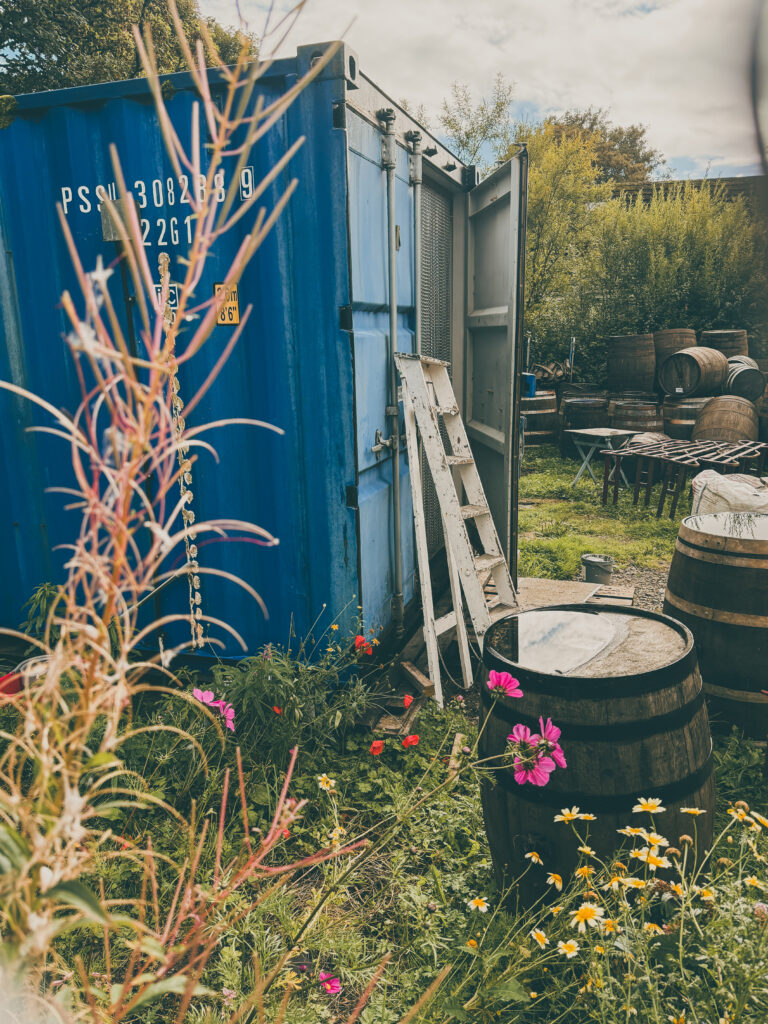
    The casks the whiskies come from can sometimes be reused, but sometimes it’s the end of the road for them and these are sold locally or chopped up for firewood.

    This is where Dornoch Craft Vinegar steps in.

    These casks are perfect for ageing vinegar.

    And vinegar shares a lot of the same process as whisky.

    And Phil, Simon and I have the same values when it comes to flavour driven production.

    So we shook hands.

    They would let me use their distillery on their off days to make a mash of barley – same barley as used for their exceptional Dornoch single malt. I would take the mash and ferment it to around 6% ABV, then convert this into vinegar and age it in their excess whisky casks.

    The product would be a truly artisanal malt vinegar that takes on the flavour of exceptional whisky.

    The flavour profile would marry with the cask it was aged in and celebrate the ethos of both businesses.

    Supporting our small town with long term employment that doesn’t rely on the seasonal tourist trade, while also putting it on the map nationally and internationally.

    It’s been a year so far of research and experimentation. I didn’t know how to make vinegar and it’s not as easy as it seems!

    Phil and Simon just ran a kickstarter to fund a full scale distillery and they are busy with that.

    (By the way they raised over £2.3 million. Pretty awesome for two dudes with a dream.)

    I work full time as a waitress so I had to use my tips to fund any equipment at the start.

    But through determination and passion the Dornoch Craft Vinegar Test Kitchen is built and up and running, with the first ever batch of wort fermenting in front of me as a type.

    2026 is going to be a fantastic year.

  • Hello world!

    Welcome to WordPress. This is your first post. Edit or delete it, then start writing!