About Dornoch Craft Vinegar
Our Story
Vinegar made from Highland barley, aged in whisky casks.
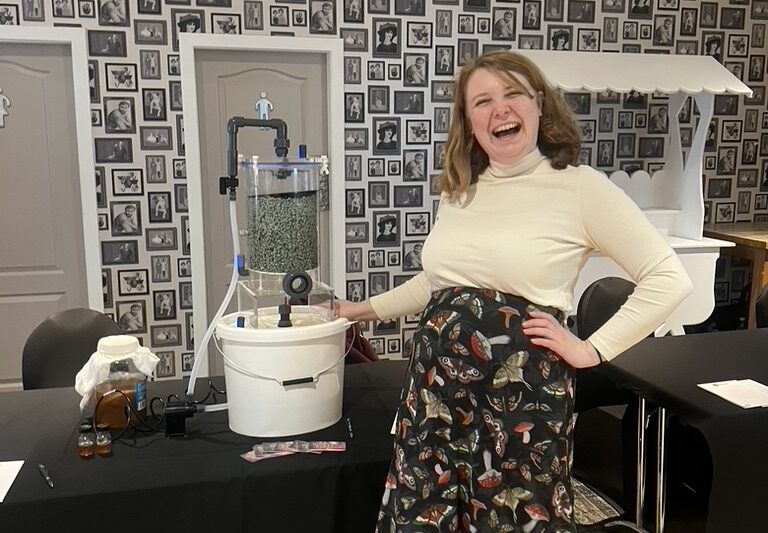
I’m Maddy Norval, and I make malt vinegar in a converted shipping container at Dornoch Distillery. Everything happens on site. I take the wort from the distillery, ferment it myself, run it through an acetification column, and age it in their ex-whisky casks. Grain to bottle, all in Dornoch.
Maddy Norval, founder
How I got here
I didn’t start with a business plan and a gap in the market. I’ve been in the Highlands about twelve years, with a background in crofting and high-end hospitality and a degree in illustration, which is an odd route into fermentation science and probably explains how I ended up doing titration tests in a pantry at 11pm.
Phil and Simon Thompson at Dornoch Distillery make some of the most interesting whisky in Scotland, and they have one of the most extraordinary cask collections I’ve seen: ex-rare malts, 1970s Ben Nevis, a cask from the nineties that once held French wine. When I worked out that I could take their organic heritage barley wort, ferment it with my own yeast, acetify it, and then age it in those casks, the question stopped being whether I should and turned into how soon I could try.
The process
How it’s made
Three ingredients, one site, and a process that takes months.
Organic heritage wort
The barley
Wort from Dornoch Distillery, the sweet liquid drawn off the mash. I ferment it to about 6% ABV with my own yeast.
Schützenbach column
The acetification
A method that dates back to the 1700s. Acetic acid bacteria convert the alcohol slowly, with plenty of air.
Three-tier Solera
The casks
Ageing in the distillery’s ex-whisky casks. Every bottle carries a component of every batch I’ve made.
Why vinegar
Three reasons, and none of them were in a business plan.
Same ingredients, different alchemy
Scotland has generations of people taking barley, water and yeast and turning them into something worth exporting, including a long stretch of doing it while hiding the stills. What I’m doing runs on the same energy. Barley goes in one end, and instead of spirit you get vinegar: barrel-aged, living, unpasteurised.

What it does in a pan
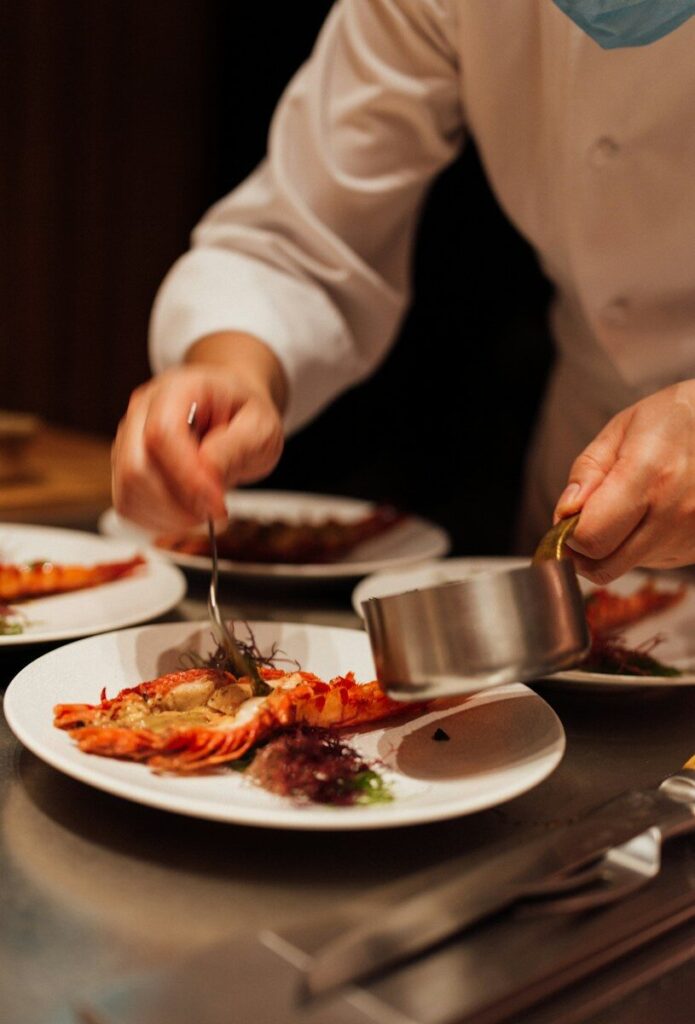
A splash of this after searing meat, and the deglazing liquid has a character that is warm, malty and rounded from the wood. It changes a Tuesday night dinner.
Alive in the bottle
Unpasteurised, so the mother culture is still in there. Three ingredients, nothing else. Delicious first, and the health benefits are a happy bonus.
Where I’m at
I’m still early in this. I don’t yet know what different barrel types do to the vinegar over years, or how fermentation temperature shifts the ester profile, or whether mother cultures have their own personalities the way sourdough starters do. I’m going to spend the next few years finding out. If you’ve got a question about the process, do ask, it’s my favourite thing to talk about.